
Is A Cup Of Tea Good For You?
Is a cup of tea good for you? Tea has been praised for its soothing and energising properties by people worldwide for millennia. The traditional calming qualities of the plant Camellia sinensis have elevated the drink made from its leaves to a role beyond just relieving thirst – it is consumed as a meditation aid to help ease nerves or to relax. However, while tea users are well aware of the benefits of C. Sinensis for mental health, scientists are only now beginning to investigate how tea affects mood and cognition.
Tea, for example, has been shown to lower levels of the stress hormone cortisol by researchers. Long-term health advantages are also emerging: consuming at least 100 millilitres (about half a cup) of green tea every day appears to reduce the incidence of depression and dementia.
Scientists are also attempting to determine the main active components that provide tea with its mental-health benefits and whether they work alone or in combination with other compounds in the beverage. Tea catechins, which include antioxidants like epigallocatechin gallate (EGCG), make up to 42 per cent of the dry weight of brewed green tea, whereas the amino acid L-theanine makes up about 3%. When ingested alone, EGCG is supposed to make people feel calmer and improve memory and attention. When caffeine and L-theanine are eaten together, they exert a comparable impact. Caffeine, which makes up to 5% of the dry weight of green tea, is proven to increase mood, alertness, and cognition.
 According to Andrew Scholey, a psychopharmacologist at Swinburne University of Technology in Melbourne, Australia, the influence of tea on behaviour is somewhat counterintuitive. While sipping Earl Grey tea, he says, “Tea is soothing, but alerting at the same time.”
The study of tea’s impact on behaviour and mental health comes when scientists are becoming increasingly interested in the function of nutrition in mental health and preventative medicine. Physicians need more therapy options for anxiety, depression, and age-related cognitive decline; these illnesses create a significant burden on health systems, and treatment alternatives are restricted.
“There’s not much out there,” Scholey says. “The thought that dietary supplements might be able to reduce the decline has huge implications for preventative health.”
Similarly, Stefan Borgwardt, a neuropsychiatrist at the University of Basel in Switzerland, laments the lack of viable therapies, claiming that around one-third of all persons suffering from anxiety and depression never find an appropriate treatment.
However, he is wary of the potential benefits of tea for patients who are severely depressed. “It’s critical not to exaggerate the impacts,” he warns. Despite significant evidence of moderate mood improvements in healthy individuals, research has failed to show that tea can aid those with mental illnesses. Furthermore, researchers must improve their understanding of how tea’s active ingredients affect the body, as well as the doses needed to cause short- and long-term effects.
The advantages of a brew
Tea is a huge industry. It is one of the most widely drank beverages on the planet, and the industry is growing. According to the United Nations ‘ Food and Agricultural Organisation, green tea output is predicted to expand at a 7.5 per cent annual pace worldwide, reaching 3.6 million tonnes in 2027. Despite its popularity, Scholey claims that little is known about tea’s impact on human behaviour. The majority of the evidence comes from epidemiological studies, which suggest that tea positively impacts mood and cognitive function. Researchers revealed earlier this year that in a healthy Korean population, people who drank green tea on a regular basis were 21% less likely to develop depression over their lifetime than non-drinkers1.
According to Borgwardt, the Korean study reveals that tea has “a relatively robust effect,” comparable to 2.5 hours of weekly activity. Long-term habitual drinking of green tea, according to epidemiological studies, may lessen the incidence of dementia. For example, a study of over 55 Singaporeans found that those who drank as little as one cup of tea per week scored better on memory and information-processing activities than non-tea drinkers.
 Epidemiological studies, on the other hand, have limitations. According to Borgwardt, good outcomes could be due to other lifestyle variables or genetics.
“A lot of studies indicates that something is going on with tea. But the research methodology doesn’t explain what’s going on,” says David Kennedy, a biological psychologist at Northumbria University in Newcastle, UK.
One possible confounding element is that the effect is caused by the process of preparing and drinking tea rather than the tea itself.
In 2007, University College London psychologist Andrew Steptoe explored whether tea’s soothing benefits are a direct biological result or stem from the social context in which it is taken, such as sitting quietly for a rest. “Tea is regularly drunk in environments that are conducive to relaxing, which may be responsible for the apparent advantages,” adds Steptoe.
Steptoe and his colleagues evaluated the effects of drinking black tea to a caffeinated placebo in healthy men. The tea and the placebo were delivered as fruit-flavoured powders that were coloured to seem like tea to hide any differences between the two beverages. Tea helped participants recover more quickly from a stressful assignment, according to the researchers3. Within 50 minutes of the task, saliva levels of the stress hormone cortisol in the tea-drinking group declined to 53 per cent of baseline levels, compared to 73 per cent for the placebo drinkers. The tea drinkers also reported feeling calmer than the placebo drinkers.
Ingredients that help the brain
Researchers are also looking into specific components that provide tea with its health benefits. L-theanine and EGCG, two important ingredients, have been shown to contribute both alone and in conjunction with caffeine in studies.
Scholey and colleagues reported in 2016 that volunteers who drank a nutrient drink containing 200 milligrammes of L-theanine (about equivalent to eight cups of tea) had lower cortisol levels and reported feeling calmer after doing stress-inducing tasks than those who drank a placebo4. Magnetoencephalography (MEG) was also utilised to assess changes in brain activity linked with the drink. Lower-frequency brainwaves, also known as alpha oscillatory activity, were shown to be higher in people who were inherently more worried. Relaxation and a lack of active cognitive processing are linked to alpha brainwaves.
Scholey discovered that combining L-theanine with caffeine improved memory and reaction speed and that the impact was stronger than either caffeine or L-theanine alone5. According to Scholey, the contrasting effects of L-theanine result in a “relaxed, capable state of mind – you are in the zone.” According to the MEG data, he believes that L-theanine helps to achieve this meditative state by relaxing only the parts of the brain that aren’t used for tasks. “It enhanced the signal-to-noise ratio,” he explains, “not by boosting the signal, but by lowering the noise.” “Focus and attention are improved as a result.”
According to Borgwardt, L-theanine could affect brain chemistry in a variety of ways. Because the molecule crosses the blood-brain barrier, it could have a direct impact on brain plasticity, which is the mechanism by which the brain regenerates itself. It may also reduce cortisol and stress levels by acting on the hypothalamus-pituitary-adrenal axis (the body’s stress response system). According to animal studies, L-theanine increases the neurotransmitter GABA (-aminobutyric acid), which decreases anxiety.
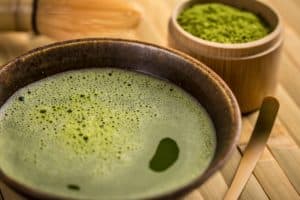
Green tea‘s other key ingredient, EGCG, appears to add to the drink’s mental-health effects as well. Scholey used electroencephalography to compare the brain activity of persons who drank either an EGCG-containing nutrient drink or a placebo in a thorough study. The alpha waves, theta waves, which are associated with peaceful wakefulness, and beta waves, which increase with focus and attention, all increased in the EGCG drinkers’ brain activity. According to the findings, the EGCG drink promoted a relaxed and alert frame of mind6. EGCG has been demonstrated in animal and in vitro studies7 to cross through the blood-brain barrier and operate directly on the brain, as well as to improve the health of blood vessels and increase the flow of nitric oxide, all of which may benefit cognitive performance.
So, Is a Cup of Tea good for you?
Despite the fact that research into the mental-health advantages of tea is increasing, there is still a lot to learn. Researchers are still baffled as to how tea’s constituent molecules interact. Coffee is well-known for improving mood and cognition, and its biology is well-understood: it prevents the sleep-controlling chemical adenosine from attaching to receptors, so maintaining brain activity and making caffeine users feel more alert. However, nothing is known regarding the interaction of caffeine and EGCG. Similarly, it’s unclear if caffeine enhances L-cognitive theanine’s effects or vice versa. Before researchers can pinpoint more accurately tea’s long-term advantages and potential use for patients with mental illnesses, such issues must be resolved. Tea’s impacts on mood and cognition have prompted even more in-depth and esoteric questions for certain researchers, like Scholey. Why, for example, hasn’t the brain evolved to work effectively without the use of chemical brews?
For the time being, says Borgwardt, there’s no reason not to urge healthy individuals to drink tea as a way to improve their mood and concentrate. According to him, tea drinking could be a relaxing complement to, or even a replacement for, the mood-boosting effects of exercise. “Is A Cup Of Tea Good For You?” he suggests. “It’s not as difficult as running three times a week!”